Isocarbon-NumberHydrocarbon Separation Membrane
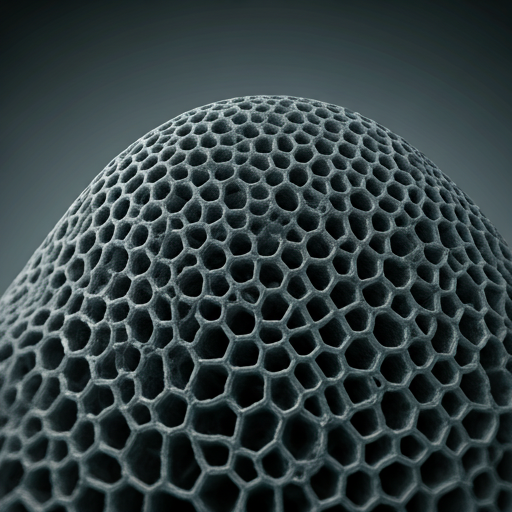
Multi-channel molecular sieve membranes are formed by intergrown zeolite crystals on a multi-channel ceramic support, yielding a dense selective layer 5-10 um thick. Membrane elements incorporate 19 to 61 parallel channels - substantially increasing packing density and reducing footprint compared with conventional tubular molecular sieve modules. Separation is driven by partial-pressure differences across the membrane, exploiting differences in adsorption-diffusion kinetics, molecular size, and shape among isocarbon-number hydrocarbon isomers (e.g., n-butane/isobutane, n-pentane/isopentane) to achieve efficient n/iso separation with high selectivity and low energy consumption. Typical applications include separation and purification of light hydrocarbon mixtures in petrochemical and refining operations.
Performance Snapshot
Packing Density
440 m2/m3
Multi-channel format
n/iso-Butane alpha
> 15
Reference binary pair
Energy Saving
> 65%
vs. heat-pump distillation
Core Engineering Features
Advanced technological implementations defining the next generation of membrane performance.
High Packing Density
Packing density reaches 440 m2/m3 - more than six times that of tubular molecular sieve membranes - enabling compact plant design with reduced capital footprint.
Reduced Sealing and Higher Strength
Sealing components are reduced by approximately 90% versus tubular modules, while mechanical strength is improved by an order of magnitude - supporting reliable industrial operation.
Molecular-Scale Precision Sieving
Ordered zeolite micropores deliver precise molecular-scale discrimination with high permeation flux and separation selectivity for demanding n/iso hydrocarbon systems.
Broad C4/C5 Isomer Applicability
Engineered for separation of multiple n/iso-isomer mixtures including C4 and C5 hydrocarbon systems encountered in petrochemical and refining process trains.
Process Architecture
Multi-Channel Architecture and Separation Mechanism
A dense zeolite selective layer (5-10 um) is intergrown on a multi-channel ceramic support. Separation proceeds via adsorption-diffusion differences and molecular size/shape discrimination under a trans-membrane partial-pressure driving force. For n-butane/isobutane systems, isobutane purity can exceed 98% with no auxiliary extractants added - delivering an environmentally friendly, energy-efficient alternative to heat-pump distillation with potential energy savings exceeding 65%.
- check_circleCompact equipment footprint with straightforward operation and maintenance
- check_circleNo comparable commercial separation-membrane product category on the market
- check_circleTypical service life of 5 years or more under recommended operating conditions
Technical Specifications
Standard specifications for 19-channel and 61-channel multi-channel molecular sieve membrane elements.
| Parameter | Value |
|---|---|
| Outer diameter, mm | 30 |
| Outer diameter, mm | 30 |
| Length, mm | 500-1000 |
| Length, mm | 500-1000 |
| Channel diameter, mm | 4 |
| Channel diameter, mm | 2.0 |
| Membrane area per element, m2 | 0.23 |
| Membrane area per element, m2 | 0.38 |
| n-/iso-Butane selectivity | > 15 |
| n-/iso-Butane selectivity | > 15 |
| n-Butane permeation rate | >=0.001 mol/(m2/s) |
| n-Butane permeation rate | >=0.001 mol/(m2/s) |
| Applicable systems | Petrochemical and refining light-hydrocarbon mixture separation and purification |
Technical FAQ & Resources
Common engineering inquiries and essential documentation for integration planning.
Multi-channel elements (19-61 channels) achieve packing densities up to 440 m2/m3 - more than six times tubular modules - while reducing sealing components by ~90% and improving mechanical strength by an order of magnitude.
For n-butane/isobutane systems, the membrane process can reduce energy consumption by more than 65% compared with heat-pump distillation, while delivering isobutane product purity exceeding 98% without adding auxiliary separation agents.
The membrane is designed for isocarbon-number hydrocarbon isomer separation - including C4 systems such as n-butane/isobutane and C5 systems such as n-pentane/isopentane - leveraging adsorption-diffusion and molecular sieving differences across the zeolite micropore network.
Under recommended operating and maintenance conditions, product service life typically reaches 5 years or more. Equipment structure is compact with straightforward installation, operation, and maintenance procedures.