High-Packing-Density Microporous Membrane Platform
A scale-up and demonstration platform for low-carbon hydrocarbon separation using multi-channel inorganic microporous membranes. Focused on high stability, high packing density, and pilot-ready system integration for C4 isomer, refinery dry gas, and natural gas purification.
Industrial Need
Low-carbon hydrocarbon separation remains one of the highest-energy unit operations in petrochemicals. In 2022, China produced over 100 million tons of ethylene, propylene, and butane, while natural gas output reached 210 billion m3.
Conventional distillation for close-boiling mixtures (such as n/i-butane and propylene/propane) requires high tray count, high pressure, and high reflux, creating a strong demand for lower-energy alternatives.
2024 Program Positioning
Membrane Mechanism & Material Route
Inorganic microporous membranes use angstrom-level pore matching for molecular sieving, moving separation from thermal equilibrium control to kinetic-diffusion control.
- grid_view
MFI for C4 Isomers
n-C4 permeance up to 1500 GPU, n/i-C4 selectivity up to ~100
- texture
ZIF-8 for C3 Separation
C3H6/C3H8 selectivity up to 130 (ideal up to 210)
- filter_alt
CHA for Dry Gas Purification
Validated in simulated refinery gas process design
- account_tree
Scale-Up Direction
Single-channel to 19/61-channel high-density architecture
Scale-Up & Module Engineering
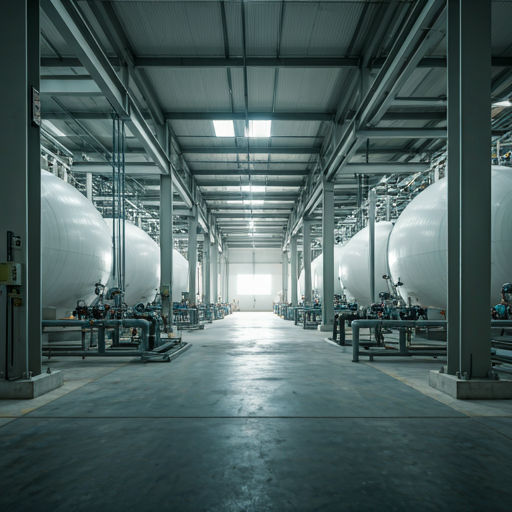
2024 work completed high-quality multi-channel carrier fabrication, long-element membrane growth, and module integration for industrial pilot readiness.
2024 Key Delivery Snapshot
Condensed annual outputs selected for engineering relevance only.
Target vs. 2024 Delivery
| Dimension | Program Target | 2024 Delivery |
|---|---|---|
| Pilot line capacity | >=500 m2/year | 500 m2/year completed and trial production started |
| Module packing density | >=200 m2/m3 | 410-420 m2/m3 achieved |
| Single module area | >=1.5 m2 | 1.54 m2 achieved |
| Core membrane element | Industrial multi-channel format | 50 cm / 19 & 61-channel elements delivered |
| Pilot application scenarios | System-level integration ready | C4, refinery dry gas, and natural gas schemes completed |
| R&D outputs | >=8 papers / >=8 patents | 10 papers / 13 patents |
Pilot Benefit Indicators
Pilot studies confirm that high-density membrane routes can significantly reduce separation energy while maintaining high product purity in hydrocarbon upgrading scenarios.
Ready to customize your implementation?
Share your requirements, operating conditions, and performance targets — we will develop a tailored membrane solution to meet your needs.