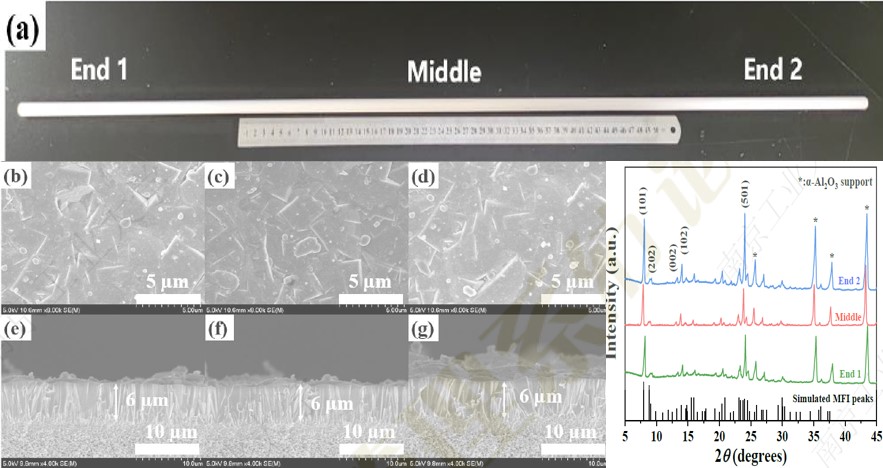
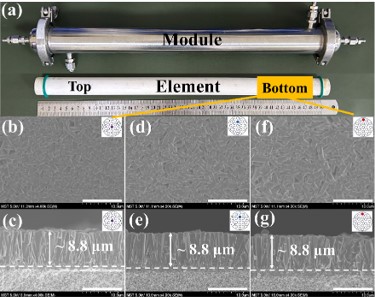
50 cm Tubular Outer Membrane
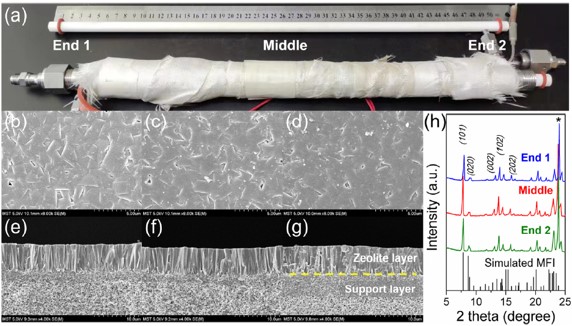
- Element length
- 50 cm
- Outer / inner diameter
- 12 mm / 8 mm
- Membrane thickness
- ~3 μm
- Effective membrane area
- ~0.018 m²
SSZ-13 molecular sieve membranes are high-performance zeolite membranes with a characteristic CHA framework topology. The aluminosilicate skeleton can be modified by heteroatom incorporation (e.g., Fe, Cu), while the well-defined eight-member-ring micropore structure constrains the pore aperture to approximately 0.38 nm - delivering pronounced shape-selective sieving. These membranes combine excellent thermal and chemical stability for demanding process environments. By tuning the Si/Al ratio, crystallite size, and membrane-layer densification, separation selectivity and permeation flux can be optimized. The synergy of structural regularity, tunable performance, and operational stability positions SSZ-13 as a highly competitive platform material in advanced separation membranes, with strong demonstrated performance in CO2 capture, hydrogen purification, and natural-gas treating. Compared with conventional separation processes such as amine absorption and pressure swing adsorption, it can save 30%-60% of energy consumption.
Performance Snapshot
CO2 / CH4
Gas phase · 5/5
>=100
Separation selectivity
>=500 GPU
Permeation rate
N2 / CH4
Gas phase · 5/5
>=15
Separation selectivity
>=80 GPU
Permeation rate
H2 / CH4
Gas phase · 5/5
>=50
Separation selectivity
>=200 GPU
Permeation rate
Advanced technological implementations defining the next generation of membrane performance.
The ordered CHA framework with ~0.38 nm eight-member-ring apertures enables precise molecular discrimination - particularly effective for separating gas pairs such as CO2/CH4, N2/CH4, and H2/CH4
The aluminosilicate skeleton supports incorporation of heteroatoms such as Fe and Cu, allowing framework chemistry to be tailored for target separations and catalytic membrane applications.
SSZ-13 zeolite membranes maintain structural integrity under elevated temperature and chemically aggressive feeds - supporting reliable operation in complex industrial gas-separation environments.
Separation selectivity and permeation flux can be optimized by controlling Si/Al ratio, crystallite size, and membrane-layer densification - balancing permselectivity with industrial throughput requirements.
Process Architecture
Separation is governed by size- and adsorption-based sieving through the CHA micropore network. Tubular and multi-channel module formats address laboratory-to-industrial scale requirements, with installed membrane areas from 0.7 to 16.2 m2 - deployed across gas upgrading, LPG refining, and petrochemical pretreatment trains.
Standard specifications for tubular and multi-channel SSZ-13 molecular sieve membranes under reference test conditions.
| Parameter | Tubular | Multi-channel |
|---|---|---|
| Membrane dimensions (ID / OD / length), mm | 8 / 12 / 500-1000 | 2-4 / 30-40 / 500-1000 |
| Number of channels | Single channel | 19 / 37 / 61 |
| Membrane area per element, m2 | 0.037 | 0.2-0.45 |
| Installed membrane area, m2 | 0.7-1.9 | 3.8-16.2 |
| Packing density, m2/m3 | 50-80 | 200-400 |
| CO2 permeance | 500-1000 GPU | 300-800 GPU |
| CO2/CH4 selectivity | >=150 | |
| Applicable systems | Alkylate gasoline feed pretreatmentLPG refininglight naphtha upgradingsolvent recovery and refininghigh-octane gasoline blending-stock purificationfine-chemical solvent productionpolyester feedstock purificationaromatics complex refiningsynthetic rubber feedstock purificationfine-chemical synthesis pretreatment | |
Module Design
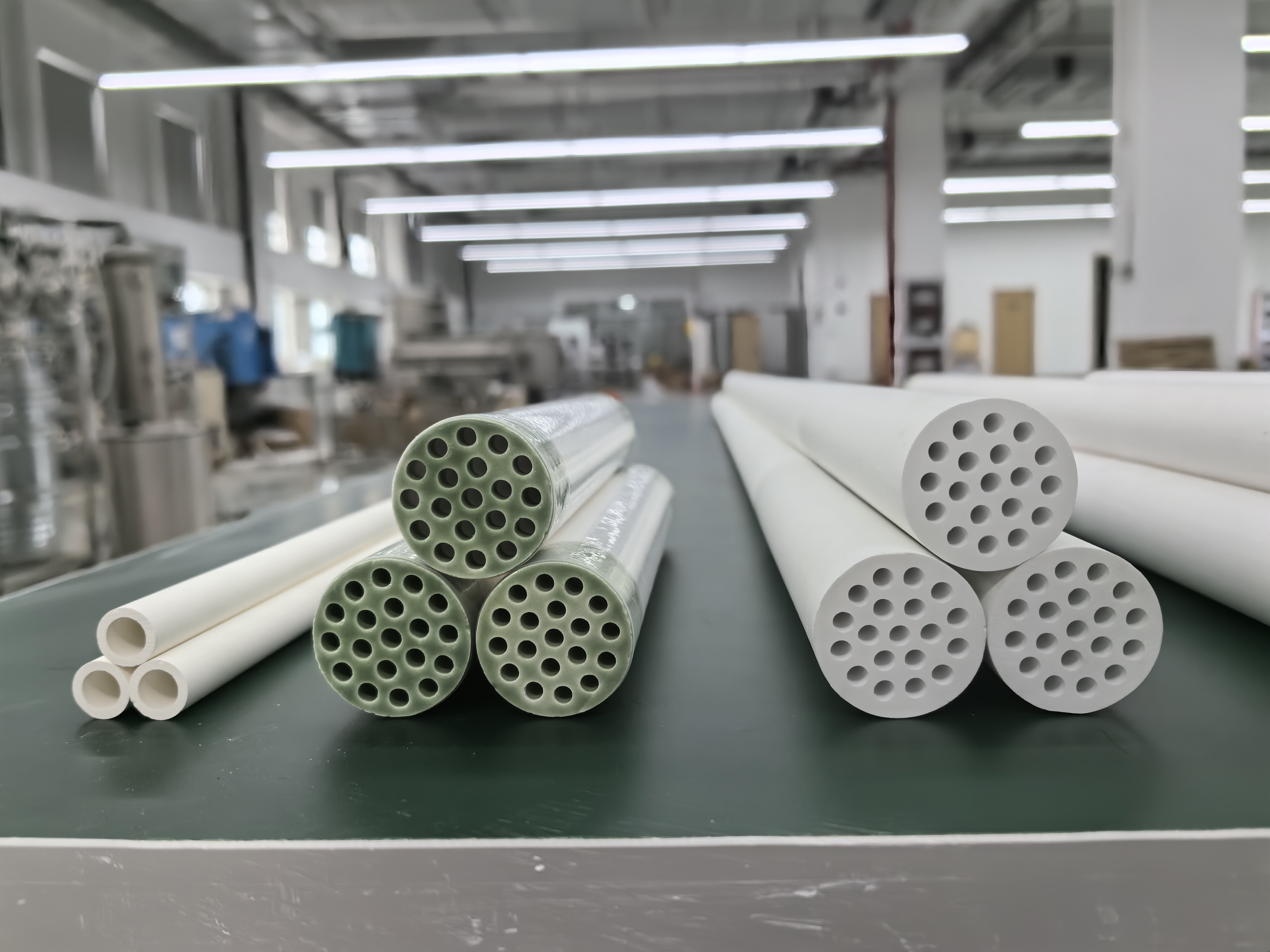
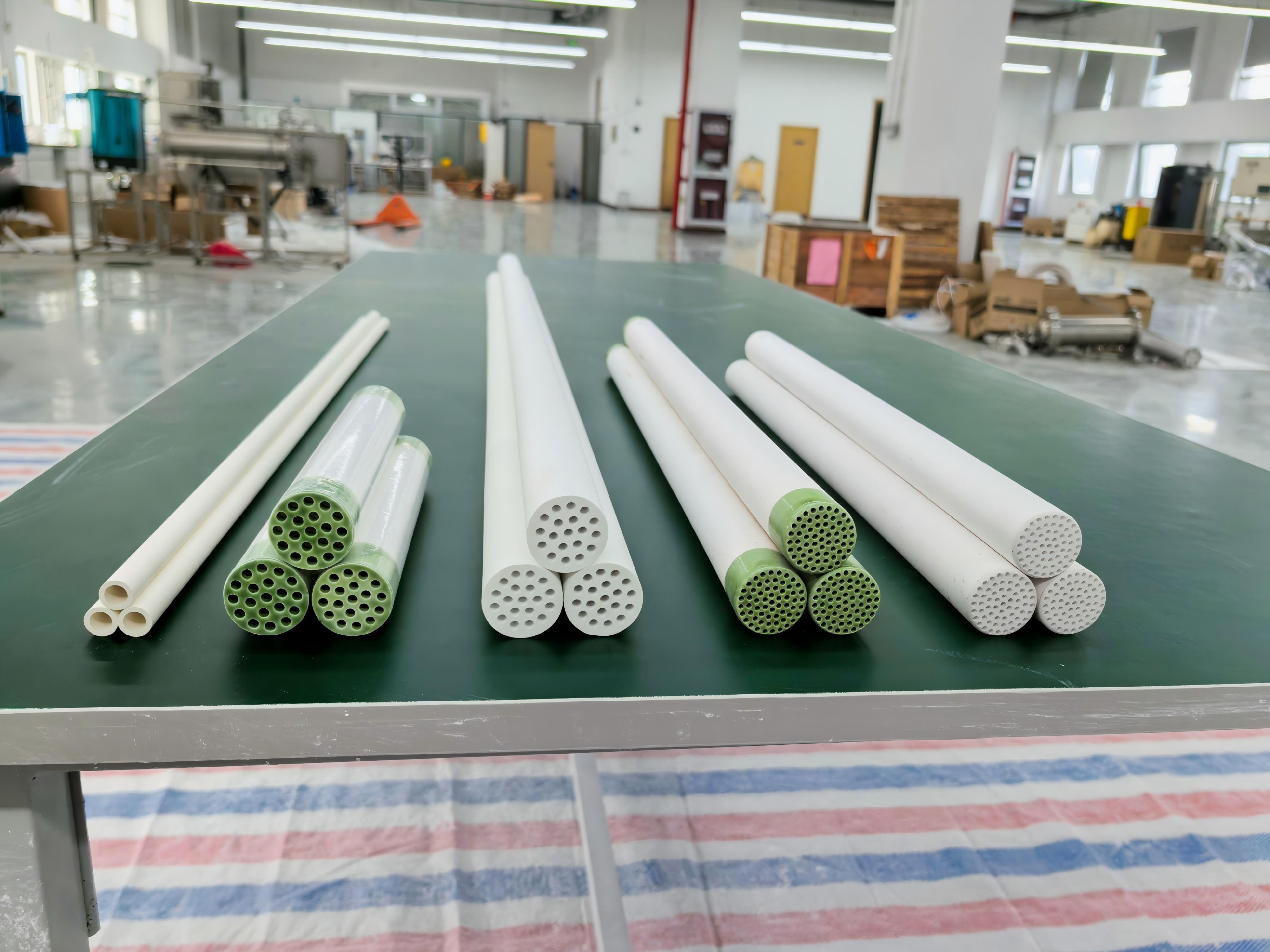
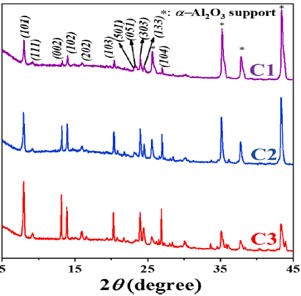
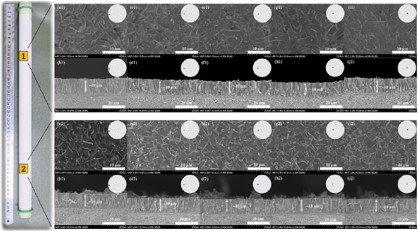
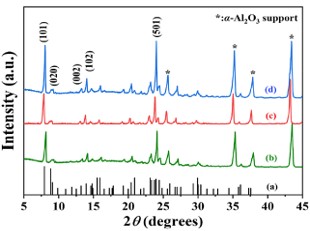
Standard tubular and multi-channel membrane element dimensions and effective membrane area.
Field Deployment
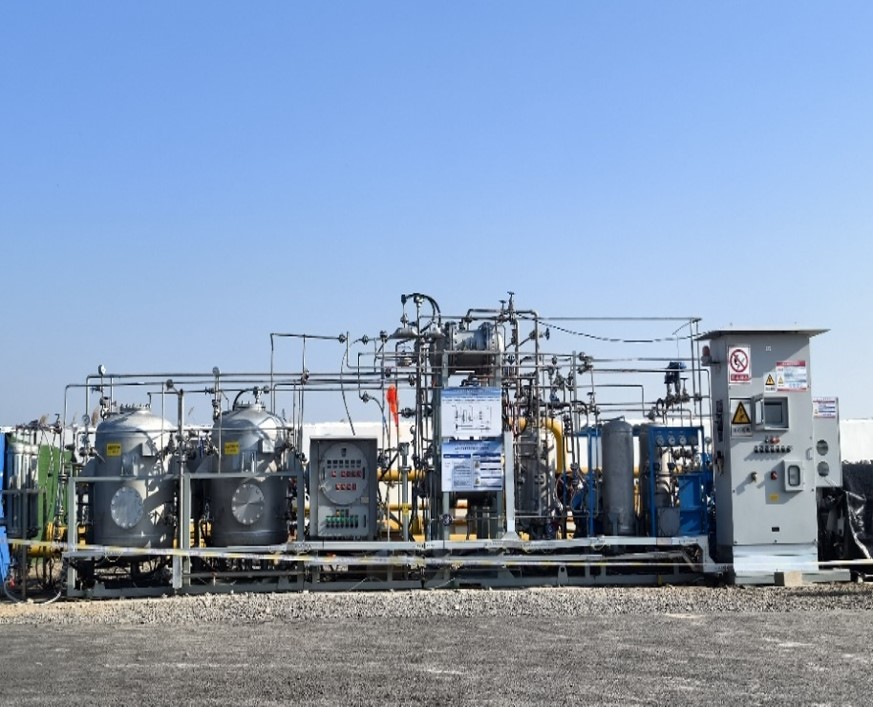
Representative vertical and horizontal R&D programs and pilot-scale deployments demonstrating SSZ-13 membrane technology in hydrocarbon separation.
Representative SSZ-13 / CHA-topology membrane programs in flue-gas carbon capture, natural-gas treating, and CO₂/hydrocarbon separation.
Conventional CO₂ capture from petrochemical furnace flue gas is energy intensive, and impurity components place strict demands on membrane stability. This program developed CHA zeolite-membrane post-combustion carbon capture and enrichment technology.
CHA membrane CO₂/N₂ performance evaluation achieved CO₂ permeance ≥2,000 GPU and CO₂/N₂ selectivity ≥20. High packing-density modules were developed with optimized sealing and internal geometry, and the effects of particulates, NOx, and SOx on membrane performance were examined. A small-scale flue-gas carbon-capture unit reached CO₂ capture concentrations above 80%, with multi-condition long-term stability testing completed.
Membrane–process–equipment integration and a capture-efficiency calculation model produced a complete flue-gas carbon-enrichment technology package and full test reports for a new membrane pathway in refining flue-gas carbon capture.
Conventional carbon capture for coal-fired power-plant flue gas faces high energy use and capital intensity, while complex flue-gas conditions demand dense membrane layers and impurity tolerance. This program developed CHA zeolite membranes and process technology for flue-gas CO₂ capture.
Nanoscale CHA seed preparation and ultrasound-assisted deposition were optimized to control crystal growth and produce ultrathin dense separation membranes. Systematic material characterization and capture tests under simulated and real flue-gas conditions clarified how process conditions affect CO₂ separation.
A full experimental research report and membrane-preparation scheme for flue-gas capture were delivered, with paper and patent outputs supporting subsequent engineering application of membrane-based low-carbon capture.
Natural-gas feeds often contain large amounts of CO₂, and conventional chemical treating consumes reagents and energy. This program developed CHA zeolite-membrane technology for natural-gas CO₂ removal.
50 cm pilot membrane tubes achieved CO₂ permeance ≥2,500 GPU and CO₂/CH₄ selectivity ≥35 in CO₂/CH₄ mixtures. A pilot system treated up to 1.0 Nm³/h of natural gas with CO₂ removal ≥95%. Overall energy use was more than 40% lower than conventional chemical decarbonization.
Lab-to-pilot validation, multi-condition testing, and iterative membrane/module optimization produced complete process data supporting a natural-gas decarbonization process package and green membrane treating solutions.
Lithium–air batteries use ambient oxygen as the cathode active species, but CO₂ in air triggers side reactions that cut capacity and cycle life. This program developed CO₂ separation membranes and adsorption materials suited to lithium–air batteries.
Effects of CO₂ concentration on electrochemical performance were quantified. Modified adsorption and membrane materials delivered CO₂/N₂ selectivity above 20 and CO₂ permeance above 1,000 GPU at room temperature and low pressure differential, reducing inlet CO₂ below 100 ppm after separation. Coupled with the battery, overall performance reached about 70% of pure-oxygen conditions, with capacity retention above 70% over 10 charge–discharge cycles.
Material modification, separation testing, and battery integration produced full reports plus patent and paper outputs for air-duty lithium–air battery practicalization.
Amine-based carbon capture is reagent intensive, energy intensive, and environmentally burdensome. This program developed stepped membrane carbon capture and hydrocarbon concentration technology for high-CO₂ CO₂/hydrocarbon feeds.
Segmented modules for high concentration ratios were developed with intensified turbulence to cut concentration polarization. Phase I at 10 L(STP)/min achieved 10× hydrocarbon concentration, C1–C2 recovery ≥90%, C3+ recovery ≥95%, and permeate CO₂ ≥98.5%, with 200-hour stability testing. Phase II targeted a 1,000 L(STP)/min skidded modular unit with product-gas CO₂ within 3% and permeate CO₂ ≥98%, plus 500-hour long-term testing.
Capture energy use fell by more than 30% versus conventional routes. Control-system development and economic assessment delivered a complete dataset for membrane equipment solutions in hydrocarbon–CO₂ capture.
Refinery dry gas and field natural gas contain nitrogen, CO₂ and other non-hydrocarbon impurities; conventional separation is energy intensive and limits hydrocarbon recovery. This program developed packaged zeolite-membrane gas-separation technology for refinery dry gas and natural gas.
High packing-density, high mass-transfer inorganic microporous membranes and modules were developed with optimized internal flow fields to suppress concentration polarization. For refinery dry gas, hydrocarbon purity ≥95% with hydrocarbon loss ≤10% was achieved; for natural gas, methane purity ≥95% with methane loss ≤10%, and overall energy use more than 20% lower than conventional routes. Process simulation, equipment development, and field pilot testing were completed.
Two membrane process packages for dry gas and natural gas, key equipment development, patent planning, and full research reports support low-energy gas purification and recovery in the oil and gas industry.
| Application scenario | Project source / Partner | Project name |
|---|---|---|
| Heating furnace combustion flue gas | Sinopec Corp. | Development of integrated technology for carbon enrichment from heating-furnace combustion flue gas |
| Natural gas / dry gas | Sinopec Corp. | Development of low-energy membrane separation technology and equipment for non-hydrocarbon components in natural gas and dry gas |
| CO₂ / hydrocarbon mixture | Beijing Photosynthesis New Energy Technology Co., Ltd. | Contracted R&D of membrane-based carbon capture from CO₂ / hydrocarbon mixtures |
| CO₂ / hydrocarbon mixture | National Key R&D Program of China | Preparation and application technology of high packing-density inorganic microporous membranes |
Common engineering inquiries and essential documentation for integration planning.
Primary target separations include CO2/CH4, N2/CH4, and H2/CH4 among other light-gas pairs where the ~0.38 nm CHA aperture and adsorption properties provide high permselectivity.
Incorporation of Fe or Cu into the aluminosilicate framework can alter adsorption affinity and catalytic activity at the membrane surface, enabling performance tuning for specific feed compositions and operating objectives beyond pure size-exclusion sieving.
Tubular modules suit laboratory, pilot, or particulate-containing feeds with simpler cleaning requirements. Multi-channel configurations deliver higher membrane area per element (0.2-0.45 m2) and packing densities of 200-400 m2/m3 - preferred for industrial-scale continuous gas separation.
Typical deployments include alkylate gasoline feed pretreatment, LPG refining, light naphtha upgrading, solvent recovery, high-octane blending-component purification, polyester feedstock purification, aromatics complex refining, synthetic rubber feedstock purification, and pretreatment for fine-chemical synthesis.